
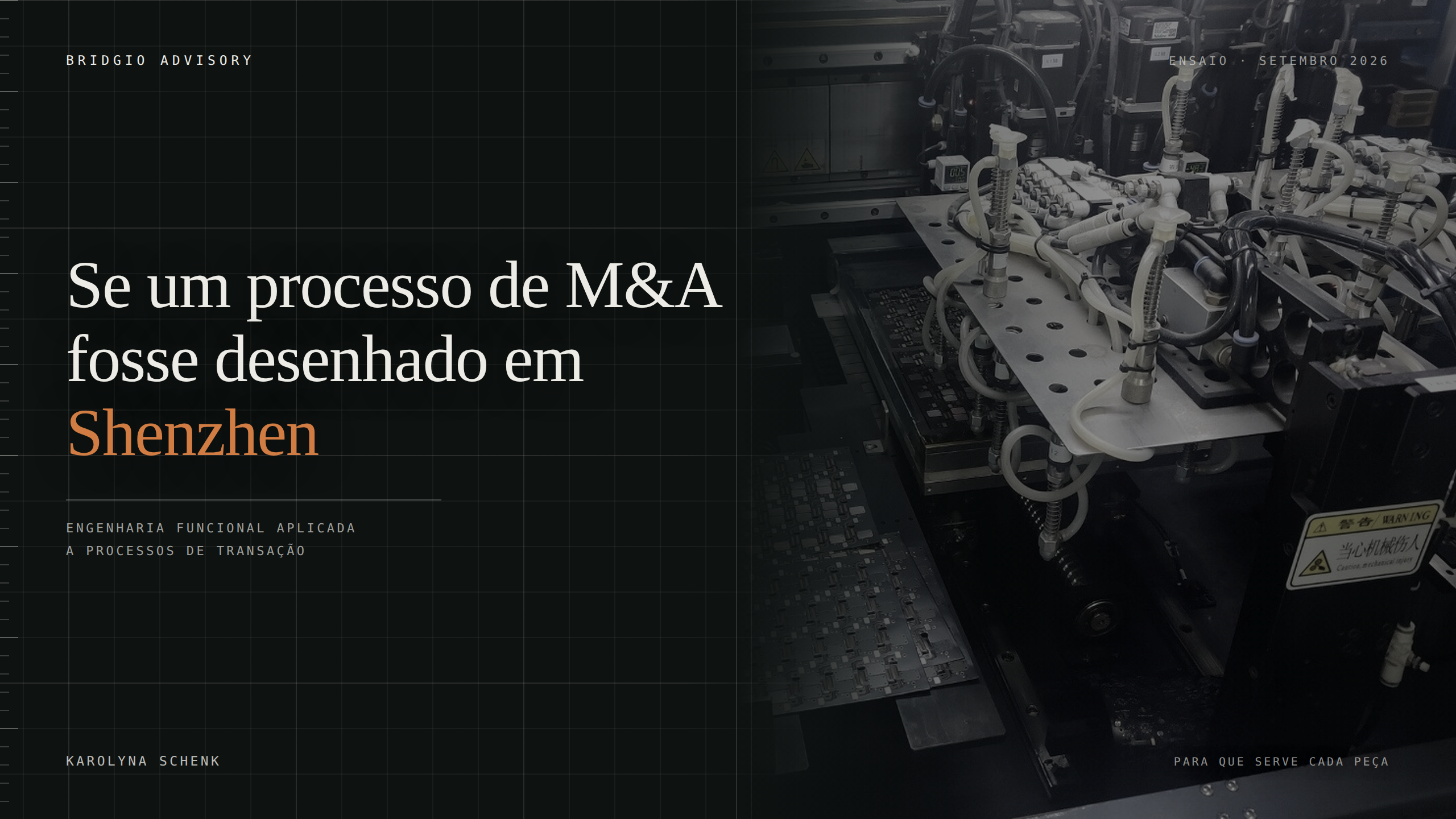
For years, the West treated Chinese shanzhai, an ecosystem that reproduces and adapts existing products, primarily as copying. That view obscured the industrial method taking shape.
In Shenzhen, copying also meant disassembling, simplifying and recombining products. Participants then returned them to market in ever-shorter cycles. The ecosystem combined a decentralized supplier network, rapid circulation of technical knowledge and modular components, meaning parts that can be combined in different ways. Some of this practice was copying; some involved intellectual-property infringement. An industrial method was also taking shape.
That logic shares some features with the model now visible, at a much larger and more sophisticated scale, among Chinese automakers. There is no need to assume a direct causal relationship between the two.
The outcomes are documented. A Roland Berger analysis attributes a 20% to 30% cost advantage to Chinese automakers. It also notes that the leaders have shortened development timelines by more than a year compared with established industry references. According to the consultancy, wages alone do not explain the advantage. It comes from structural efficiency and management discipline across the value chain. Companies run stages in parallel, involve suppliers at the concept phase, use virtual validation to replace some physical prototypes and avoid over-engineering by limiting technical features to what is needed.
These practices reveal recurring weaknesses in mergers and acquisitions processes: teams keep in sequence stages that could run in parallel, use standardized materials instead of adapting them to the target company, and produce volume instead of selecting what matters.
The function of each stage
A sell-side process, meaning a process to sell a company, often follows a familiar sequence: a teaser, an anonymous summary that filters interested parties; an NDA, or confidentiality agreement; an information memorandum; non-binding offers, which do not yet bind the buyer; a data room, a secure document site; a management presentation; due diligence, the financial, legal and operational review; exclusivity; and an agreement. Much of this sequence is inherited rather than designed for each transaction.
Each stage should have a defined function.
Teaser (anonymous summary)
Filter interested parties
Information memorandum
Give the buyer comparable information and reduce information gaps
Data room (secure document site)
Enable verification
Presentation by the management team
Test the credibility of management and the case for the deal
Exclusivity
Justify the buyer’s final review costs
Asking which decision each stage supports guides four process choices.
Start with transaction constraints
First, the team defines a target cost. Then it designs the product to meet that cost without sacrificing essential functions. In mergers and acquisitions, the same approach starts with the conditions for an acceptable outcome: valuation; deal structure; the list of potential buyers; certainty that the deal will close; and timing. The process is then designed backward. In many cases, the reverse happens: the process begins before the outcome is defined.
Run in parallel what does not compromise confidentiality
Completing the seller’s financial, legal and tax due diligence before launch, reduces later delays. The company can also resolve corporate and tax issues while contacting buyers and start competition analysis on the first day. These steps shorten stages without disclosing more about the deal. Sophisticated processes already use this approach, but it is not universal. An eleven-month process ends in a different environment from the one in which it began, and no clause eliminates that risk.
Bring advisers into preparation
When lawyers, tax advisers and accountants enter only during due diligence, they often document a problem that preparation could have resolved. Addressing a possible obligation or risk beforehand often leads to a negotiated discount. Discovering it later can break the deal.
Remove work with no decision-making purpose
A ninety-page memorandum does not increase the price simply because it has ninety pages. Its value lies in what it clarifies: the questions it answers, the economic case it supports and the analysis it lets the buyer perform internally. The buyer will have to defend the acquisition before a committee that does not include the seller. Material that does not serve those functions adds effort without improving the decision.
When the comparison stops being useful
The comparison helps only to a point. In mergers and acquisitions, precision matters more than enthusiasm.
A company is sold once
A company offers no next version in which to correct a poorly run process. Industrial methods tolerate repeated adjustments because they are inexpensive when millions of units lie ahead. In mergers and acquisitions, each attempt affects the asset itself. A poorly run process damages the list of potential buyers. There is no next batch to correct the impression it creates, and that perception has no defined expiry date.
Confidentiality limits parallelism
Much of manufacturing’s shorter timing comes from testing early and with many people. A seller cannot test the case for the deal with thirty buyers without the market finding out. Unauthorized disclosure of information too early can cost more than any month saved.
Speed does not replace verification
China has also begun to limit this reduction in timing. On August 27, 2026, four agencies launched a one-year national campaign on production consistency and vehicle quality. The campaign focuses on reliability, durability and validation of new technologies. In parallel, a proposal is advancing to raise durability testing for new-energy vehicles from 15,000 to 30,000 kilometers.
In mergers and acquisitions, some stages have timetables that cannot be compressed. Full due diligence, meaning an effective review of facts and documents, is one of them. Cutting verification transfers risk to after the deal closes. That risk can return as an indemnity claim, a lost earn-out, which is additional payment tied to performance, or arbitration. The schedule records the immediate gain; cash absorbs the loss, potentially two years later.
Allocate time where it reduces risk
In mergers and acquisitions processes, spend time on the steps that reduce risk. Run in parallel the steps that do not compromise confidentiality.
In functional engineering, speed results from the discipline of defining the purpose of each stage and removing what does not support a decision.
Before launch, sellers should identify the material the buyer needs for its analysis and separate it from inherited routine that does not support a decision. That review reduces due diligence questions without cutting verification.
“In a mergers and acquisitions process, that question can remove months of inherited steps and protect the weeks that truly cannot be shortened.”
Karolyna Schenk · Bridgio Advisory
Sources
- [1]Roland Berger (2026). China’s cost and speed advantage.
- [2]Reuters (2026). China launches year-long auto quality drive, mandates defect recalls.
- [3]China Daily (2026). Tougher road tests to raise NEV quality control.
- [4]CCCB Lab (2015). The Maker Culture in China (II): Shanzhai, Emerging Innovation in an Open Manufacturing Ecosystem.
Originally published on Karolyna Schenk’s LinkedIn.
Preparing a mergers and acquisitions process?
Schedule a confidential conversation to discuss preparation, potential buyers and timing.