
The software and technology sector in Latin America has moved from a venture capital investment cycle marked by rapid growth into a period of consolidation. Strategic buyers and global financial investors now apply more selective criteria. The price of a transaction depends on financial performance, the expected benefits from combining the companies and the ability to integrate them.
In software mergers and acquisitions (M&A) in Latin America, founders, financial investors and international buyers need to connect market signals with valuation, diligence and integration decisions.
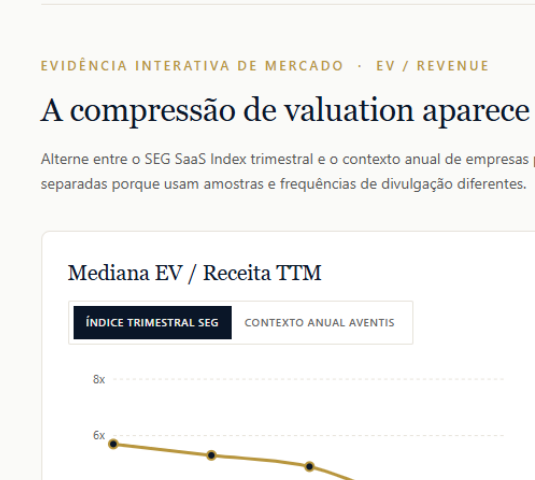
Software company valuation: from gross annual recurring revenue (ARR) to the Rule of 40
When assessing software companies, buyers place greater importance on the quality of recurring revenue, customer retention, margin and the ability to turn growth into cash generation. Strategic buyers and financial investors apply these criteria in a more selective capital market.
Annual recurring revenue (ARR) remains an important reference point, but it does not by itself determine a company's value. The Rule of 40 is a metric that adds growth and margin. It helps compare software companies at different stages of maturity.
In an international transaction, operating indicators must substantiate the value thesis, meaning the reason why a buyer would pay for the company. To do so, definitions must be consistent, the track record must be reliable and the drivers of growth must be clear.
Vertical subscription software (vertical SaaS) and customer switching costs
Sector-focused solutions can hold a competitive position that is difficult to replace when they are part of critical processes in that sector. Their value includes the software licence, operational knowledge, accumulated data and the cost the customer perceives in switching suppliers.
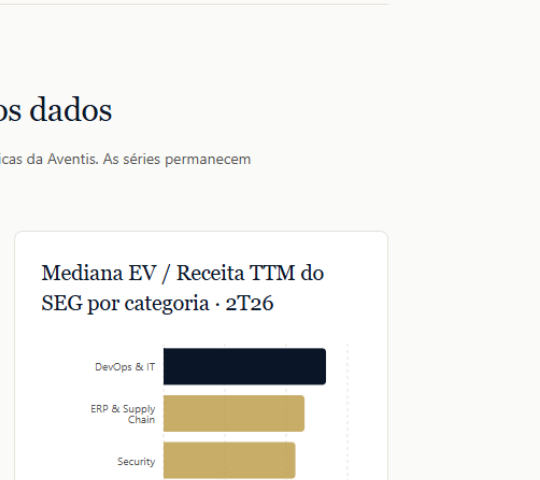
In mergers and acquisitions (M&A), this switching cost can generate commercial and strategic synergies, or expected benefits from combining the companies. An analysis based solely on the revenue multiple, the ratio of enterprise value to revenue, may not capture these benefits. The buyer should assess the depth of the customer relationship, the revenue that is genuinely recurring and the capacity to expand within the existing customer base.
The investment thesis should show the relationship between product, customer retention, distribution and consolidation potential. This relationship can make a sector-focused software company a strategic platform for a global buyer to grow or consolidate the sector.
Enterprise resource planning (ERPs) consolidation and preparation for an international transaction
The fragmentation of enterprise resource planning (ERPs) creates consolidation opportunities, but it also increases integration risk. In software, acquiring a customer base is only the beginning. Value depends on integrating product, data, teams, channels and processes without compromising customer trust.
Preparation for an international transaction begins before the formal launch of the process. The company should identify which buyers have a strategic rationale for acquiring the business. It should also organise financial and operating information, map technology dependencies and anticipate regulatory, cultural and governance risks.
For founders and financial investors, this preparation enables a more precise discussion of the expected benefits, product continuity and integration. For buyers, it reduces information asymmetry, meaning the difference between what each party knows, and improves diligence decisions.
Prepare the transaction before going to market
Decisions made before the first contact with the market set the course of a software transaction. The company should identify the metrics that support its value thesis, the risks that can interrupt diligence and the buyers that have a strategic reason to act.
The work includes reconciling annual recurring revenue (ARR), recognised accounting revenue and churn, or the loss of customers or revenue. It also includes documenting contracts and title to intellectual property, explaining the product architecture, organising leadership and realistically estimating the expected benefits and integration effort.
Preparation should allow the buyer to assess why the company is relevant, how the expected benefits can be realised and what conditions the combination of the companies requires. Verifiable information accelerates this review without reducing the rigour of diligence.
What is required to execute the transaction
In 2026, the value of a software company depends on the quality of growth, including recurring revenue, retention and margin, and on clarity about how it fits into the buyer's strategy.
Preparation should cover diligence, integration and the definition of who will make each decision. Without this preparation, it is not possible to compare the expected benefits across proposals in international transactions.
Preparing the transaction before going to market reduces questions during diligence, enables better comparison of proposals and anticipates integration risks.
Karolyna Schenk · Bridgio Advisory
References
- [1]Software Equity Group (SEG). 2Q26 Quarterly SaaS Report. Second-quarter 2026 data covering 106 public B2B cloud software companies and 2,784 trailing-12-month SaaS M&A transactions.
- [2]Aventis Advisors. SaaS Valuation Multiples: 2015 to 2026, Q1 2026 update. Listed SaaS companies; S&P Capital IQ data through March 26, 2026, and a sample of 543 M&A transactions from 2015 through that date.
- [3]Bessemer Venture Partners. The Rule of X, January 2, 2024. Defines the Rule of 40 and analyzes the relationship between growth, margin, and valuation multiples in the BVP Cloud Index over approximately five to six years.
- [4]McKinsey & Company. How strategic buyers can outperform financial investors by building a ‘synergy muscle’, February 13, 2026. Analysis of cost, capital, and revenue synergies and early integration planning in M&A.
Planning to buy, sell or receive investment in a software company in an international transaction?
Speak with Bridgio Advisory to define the scope and timing of the process.